from Tasha Tudor's Mother Goose (c. 1944).
One parent's (and her kids') guide to navigating the library and bookstore. My recommendations in children's book classics . . . literature for little ones, then and now.
Showing posts with label Picture Book. Show all posts
Monday, January 6, 2014
Sunday, December 22, 2013
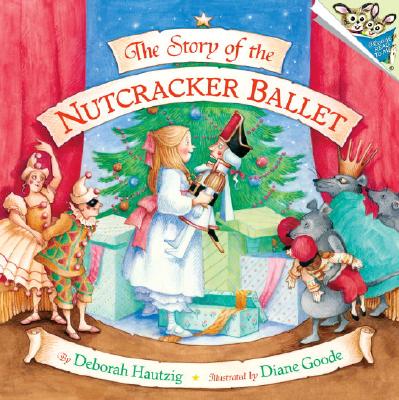
The Story of the Nutcracker Ballet
But have you seen Diane Goode's quirky illustrations of this Nutcracker? If not, you're in for a treat in the Land of Sweets.
Her characters look like you could just reach right into the pages and pull out your very own doll . . . they're so droll!
In fact, the only disappointment with The Story of the Nutcracker Ballet is that the characters don't actually come to life, even after a midwinter nap.
Wednesday, November 13, 2013
Leaf Man
Leaf Man (c. 2005) by Lois Elert remains one of those stories that's just pure-and-tee fun! If you don't believe me, just try to check this book out . . . there's a waiting list at the library . . . and then once you get it, you'll first notice the love-worn cover of this newer book, just published in 2005. The story begins on the cover jacket flap: Where does a Leaf Man go when the wind blows? Do you know? Follow the fantastical journey of the Leaf Man and his Leaf Friends.
While your children examine the creative and intricate construction of Elert's illustrations, they cannot help but recognize the names of the leaves. Elert constructed the quirky illustrations in Leaf Man through years of collecting and copying actual fall leaves. A wonderful book to own, Leaf Man inspires the youngest to the oldest of us. After reading it, my children and their friends have embarked on a journey of gathering leaves to create their own leaf men, leaf animals, and leaf fairies. What better way to teach children the beginnings of botany than through this fabulous fall read that Lois Ehlert provides.
If your family had a blast reading Leaf Man, then here's some more Lois Ehlert books to check out:
Red Leaf, Yellow Leaf (c. 1991) explores the life cycle of a maple tree.
Nuts to You! (c. 1993) follows a day in the life of a squirrel.
Labels:
Ages 0-8,
Art,
Autumn,
Leaves,
Picture Book,
zz: Elert-Lois
Tuesday, July 23, 2013
Sleep Like A Tiger
Night, night, and sweet dreams . . .
Here are some of my favorite pages:
Thursday, July 11, 2013
Too Tall Houses
Struggling with selfishness? Got the gimmes?
Sick of hearing, "Mooooooooom! Johnny won't give it back!" or "Daaaaaaaaaaad! Sally hit me!"
While I thought that Too Tall Houses by Gianna Marino (c. 2012) presented a lighthearted (and B-E-A-U-T-I-F-U-L-L-Y illustrated) approach to this time-worn dilemma, the book sparked an interesting conversation amongst unsuspecting little listeners. And while I thought that it prompted a fortuitous response among my brood, I was pleasantly surprised to learn that my friend Sarah's brood responded the same way. So give it a whirl.
Wednesday, July 10, 2013
It Couldn't Be Worse!
So are y'all starting to get on each other's nerves yet? Your family, that is. :) Maybe in all this rain, you're driving each other up the wall? It's that time of summer when some parents and/or siblings start looking forward to school starting.
Here's a book full of laughs that just might change your perspective. Check out It Couldn't Be Worse! by Vlasta van Kampen (c. 2003). And for a sneak peek, continue reading the first page:
The tiny house had just one room.
A poor farmer, his wife, their six children, and the grandparents lived there.
They quarreled and fought and got in each other's way. . . .
Here's a book full of laughs that just might change your perspective. Check out It Couldn't Be Worse! by Vlasta van Kampen (c. 2003). And for a sneak peek, continue reading the first page:
The tiny house had just one room.
A poor farmer, his wife, their six children, and the grandparents lived there.
They quarreled and fought and got in each other's way. . . .
Saturday, June 29, 2013
books with homonyms
hom·onym noun \ˈhä-mə-ˌnim, ˈhō-\ [hom-uh-nim]:
The folks around here are going through a phase of books with homonyms. They absolutely L-O-V-E them! They're going bonkers over Amelia Bedelia and Fred Gwynne books, so I had to pass along the love. Seriously, they think these books are hilarious!!! So if you would like to give it a whirl, here are some of our favorites:
Books written and illustrated by Fred Gwynne (Yep, for those of us -parents- who remember The Munsters TV show, these are by "Herman Munster." FUNNY!):
The King Who Rained (c. 1970)
A Chocolate Moose for Dinner (c. 1976)
A Little Pigeon Toad
The Sixteen Hand Horse
Books written by Herman Parish and illustrated by Lynne Avril:
picture books:
Amelia Bedelia's First Library Card (c. 2013)
Amelia Bedelia's First Vote (c. 2012)
Amelia Bedelia's First Field Trip (c. 2011)
Amelia Bedelia's First Apple Pie (c. 2010)
Amelia Bedelia's First Day of School (c. 2009)
Amelia Bedelia's First Valentine's (c. 2009)
I Can Read! books Level 1:
Amelia Bedelia Makes a Friend (c. 2011)
Amelia Bedelia Sleeps Over (c. 2012)
Amelia Bedelia Hits the Trail (c. 2013)
chapter books:
Amelia Bedelia Means Business (c. 2013)
Amelia Bedelia Unleashed (c. 2013)
Amelia Bedelia Road Trip (c. 2013)

And the original Amelia Bedelia books by Peggy Parish:
Amelia Bedelia
Come Back, Amelia Bedelia
Amelia Bedelia and the Surprise Shower
Thank You, Amelia Bedelia
Play Ball Amelia Bedelia
Amelia Bedelia TREASURY
Amelia Bedelia and the Baby
Amelia Bedelia Helps Out
Good Driving Amelia Bedelia
Teach Us, Amelia Bedelia
Calling Doctor, Amelia Bedelia
BRAVO, Amelia Bedelia
Amelia Bedelia's Family Album
Amelia Bedelia, Rocket Scientist
Go West, Amelia Bedelia!
Merry Christmas Amelia Bedelia
Amelia Bedelia 4 Mayor
1.
2.
3.
http://dictionary.reference.com/browse/homonym
(loosely) a word of the same written form as another but of different meaning and usually origin, whether pronounced thesame way or not, as bear “to carry; support” and bear “animal” or lead “to conduct” and lead “metal;” a homograph.
The folks around here are going through a phase of books with homonyms. They absolutely L-O-V-E them! They're going bonkers over Amelia Bedelia and Fred Gwynne books, so I had to pass along the love. Seriously, they think these books are hilarious!!! So if you would like to give it a whirl, here are some of our favorites:
Books written and illustrated by Fred Gwynne (Yep, for those of us -parents- who remember The Munsters TV show, these are by "Herman Munster." FUNNY!):
The King Who Rained (c. 1970)
A Chocolate Moose for Dinner (c. 1976)
A Little Pigeon Toad
The Sixteen Hand Horse
Books written by Herman Parish and illustrated by Lynne Avril:
picture books:
Amelia Bedelia's First Library Card (c. 2013)
Amelia Bedelia's First Vote (c. 2012)
Amelia Bedelia's First Field Trip (c. 2011)
Amelia Bedelia's First Apple Pie (c. 2010)
Amelia Bedelia's First Day of School (c. 2009)
Amelia Bedelia's First Valentine's (c. 2009)
I Can Read! books Level 1:
Amelia Bedelia Makes a Friend (c. 2011)
Amelia Bedelia Sleeps Over (c. 2012)
Amelia Bedelia Hits the Trail (c. 2013)
chapter books:
Amelia Bedelia Means Business (c. 2013)
Amelia Bedelia Unleashed (c. 2013)
Amelia Bedelia Road Trip (c. 2013)

Amelia Bedelia
Come Back, Amelia Bedelia
Amelia Bedelia and the Surprise Shower
Thank You, Amelia Bedelia
Play Ball Amelia Bedelia
Amelia Bedelia TREASURY
Amelia Bedelia and the Baby
Amelia Bedelia Helps Out
Good Driving Amelia Bedelia
Teach Us, Amelia Bedelia
Calling Doctor, Amelia Bedelia
BRAVO, Amelia Bedelia
Amelia Bedelia's Family Album
Amelia Bedelia, Rocket Scientist
Go West, Amelia Bedelia!
Merry Christmas Amelia Bedelia
Amelia Bedelia 4 Mayor
Monday, June 24, 2013
Tea REX
Cordelia knows all the manners that accompany a proper tea.
But what happens when you invite a Tyrannosaurus Rex to a tea party?
Check out Tea REX by Molly Idle (c. 2013) to find out. And be sure to include both brothers and sisters in this reading!
Saturday, June 22, 2013
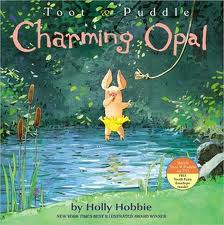
Charming Opal
If you've been following ReadMeAStory from the beginning, you know that around here we love Holly Hobbie's Toot & Puddle characters! If you want to check out a Toot & Puddle summertime adventure, check out Charming Opal (c. 2003).
Cousin Opal comes to visit Woodcock Pocket and enjoy all the pleasures of summertime in the country. But in the meantime, she looses her tooth. And I do mean that she looses it. Find out if the cousins find it in time for the Tooth Fairy's evening visit.
Saturday, March 2, 2013
The Astonishing Secret of Awesome Man
Duhnn-dat-duhnnnnnn!
Dunt-duh-da-duhnnnn!
Boys and girls! Today we're introducing a new super hero.
Hold onto your hats. He's not for the faint at heart. He's Awesome Man.
Friend to those with big imaginations. Arch enemies to those who hurt others. He's Awesome Man.
Readers, have your mom or dad run to the library to pick up The Astonishing Secret of Awesome Man (c. 2011) written by Michael Chabon and illustrated by Jake Parker. You absolutely don't want to miss out on discovering just how Awesome Man shoots his positronic rays and rids the world of evil villans.
Parents: This is a recommendation that dads will thoroughly enjoy reading to their youngsters. And moms, you'll love the mini moral that's so artfully hidden in the super hero lingo.
Thursday, February 28, 2013
Crafty Chloe
Meet Chloe:
Chloe isn't very good at sports.
Video games were never her thing.
And when she took dance lessons, she had the grace of a camel in roller skates.
What Chloe is very good at is making stuff . . . (DiPucchio)
What will Chloe give her dear friend Emma for her birthday? Be sure to check out this endearing story to find out! Crafty Chloe (c. 2012) by Kelly DiPucchio and illustrated by Heather Ross is a new favorite here at ReadMeAStory. I'm talking about: we want sequels!!!
And if you can't get your hands on a copy of this darling book anytime soon, then make your own crafts at the author's blog: http://craftychloe.squarespace.com/
Saturday, February 23, 2013
Boy Naturalist
Okay folks, I've learned some new things reading the kids' books. For one, did you know that John James Audubon disproved Aristotle's (and then current) scientific theory that birds don't fly underwater during winter . . . they migrate south. Now it seems downright silly to even imagine that people used to believe this as truth. But what is absolutely fascinating to my kids and me is that Audubon disproved the theory while he was a teen. Not only that, he recognized and copied bird calls and songs when he wasn't even in the "double-digits."
The kids were amazed by other stories of Audubon's life. In fact, we couldn't get enough of him. We kept searching for more books and more stories.
If you'd like to read some stories of wanderlust and adventure, you must check out both the childhood and adult stories of John James Audubon. And then after you've heard the tales of the talented artist / naturalist, check out the books with his very own, intricate bird illustrations. This has been a delightful exploration week at ReadMeAStory! I hope your family enjoys the biographies and illustrations as much as we have!
Here are some of our favorites:
Begin with The Boy Who Drew Birds: a story of John James Audubon by Jacqueline Davies and illustrated by Melissa Sweet (c. 2004), which Sweet beautifully illustrates herself, sometimes copying Audubon's field book, note-taking, sketching perspective.
Audubon: Painter of Birds in the Wild Frontier by Jennifer Armstrong and Jos. A Smith (c. 2003) presents three of our favorite WOW stories in Audubon's adulthood. This book presents Audubon as more of a Daniel Boone frontiersman and explorer than the other books did.
You may also want to check out:
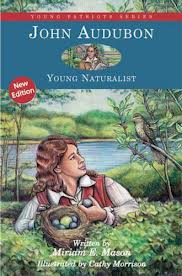
John Audubon: Young Naturalist by Miriam E Mason and Cathy Morrison (c. 2006) presents a great overview of Audubon's childhood and youth. I would recommend this book for 2nd - 4th grade readers. Although, we did find the illustrations a little odd.
The kids were amazed by other stories of Audubon's life. In fact, we couldn't get enough of him. We kept searching for more books and more stories.
If you'd like to read some stories of wanderlust and adventure, you must check out both the childhood and adult stories of John James Audubon. And then after you've heard the tales of the talented artist / naturalist, check out the books with his very own, intricate bird illustrations. This has been a delightful exploration week at ReadMeAStory! I hope your family enjoys the biographies and illustrations as much as we have!
Here are some of our favorites:
Begin with The Boy Who Drew Birds: a story of John James Audubon by Jacqueline Davies and illustrated by Melissa Sweet (c. 2004), which Sweet beautifully illustrates herself, sometimes copying Audubon's field book, note-taking, sketching perspective.
Audubon: Painter of Birds in the Wild Frontier by Jennifer Armstrong and Jos. A Smith (c. 2003) presents three of our favorite WOW stories in Audubon's adulthood. This book presents Audubon as more of a Daniel Boone frontiersman and explorer than the other books did.
You may also want to check out:
John Audubon: Young Naturalist by Miriam E Mason and Cathy Morrison (c. 2006) presents a great overview of Audubon's childhood and youth. I would recommend this book for 2nd - 4th grade readers. Although, we did find the illustrations a little odd.
Labels:
Adventure,
Ages 0-8,
Ages 8-13,
America,
Art,
Biography,
Birds,
Chapter book,
Nature,
Picture Book,
Science
Sunday, February 10, 2013
The Great Backyard Bird Count!
I first heard about the bird count from Happy Homemaker UK in her post last year about the "Big Garden Birdwatch." I so desired to do our own bird count but couldn't find information on it anywhere . . . that is . . . until . . . this year! Those of us around here at ReadMeAStory cannot possibly wait until Friday, February 15, when the Great Backyard Bird Count begins.
So what's it all about?
From Feb. 15 through Feb. 18, folks across the nation will be spending at least 15 min. (or longer) a day watching the birds in their own backyard. We'll count, record, and report all the birds we see.
What's the point? Why?
(as copied exactly from http://www.birdsource.org/gbbc/whycount.html):
In other words:
We're participating in a science experiment by helping provide research and statistics for the National Audubon Society's various bird studies, including bird migratory patterns. So by participating only 15 min. a day, we're contributing to legitimate research!
Some of our favorite birdwatching books around here at ReadMeAStory include:
COUNTING is for the Birds by Frank Mazzola, Jr. (c. 1997) covers several developmental skills all at once. While teaching your child to count to twenty, Mazzola introduces rhyme, bird facts, number recognition, bird species identification, all while weaving together a hidden plotline.
The kids' very favorite bird identification guide is The Pocket Naturalist Guide: South Carolina Birds: An Introduction to Familiar Species (State Nature Guides) [Pamphlet] by James Kavanagh (c. 2002). Read more about this resource on my post about The Pocket Naturalist Guides
Our Yard is Full of Birds (c.1992) by the mother daughter team Anne & Lizzy Rockwell tells a boy's story of bird watching while identifying various species of birds. Lizzy Rockwell's watercolor and pencil illustrations beautifully capture each bird's unique traits.
So what's it all about?
From Feb. 15 through Feb. 18, folks across the nation will be spending at least 15 min. (or longer) a day watching the birds in their own backyard. We'll count, record, and report all the birds we see.
What's the point? Why?
(as copied exactly from http://www.birdsource.org/gbbc/whycount.html):
Scientists and bird enthusiasts can learn a lot by knowing where the birds are. Bird populations are dynamic; they are constantly in flux. No single scientist or team of scientists could hope to document and understand the complex distribution and movements of so many species in such a short time.
The longer these data are collected, the more meaningful they become in helping scientists investigate far-reaching questions, like these:
• How will the weather influence bird populations?
• Where are winter finches and other “irruptive” species that appear in large numbers during some years but not others?
• How will the timing of birds’ migrations compare with past years?
• How are bird diseases, such as West Nile virus, affecting birds in different regions?
• What kinds of differences in bird diversity are apparent in cities versus suburban, rural, and natural areas?
• How will the timing of birds’ migrations compare with past years?
• How are bird diseases, such as West Nile virus, affecting birds in different regions?
• What kinds of differences in bird diversity are apparent in cities versus suburban, rural, and natural areas?
The Great Backyard Bird Count is led by the Cornell Lab of Ornithology and National Audubon Society, with Canadian partner Bird Studies Canada and sponsorship from Wild Birds Unlimited.
In other words:
We're participating in a science experiment by helping provide research and statistics for the National Audubon Society's various bird studies, including bird migratory patterns. So by participating only 15 min. a day, we're contributing to legitimate research!
Some of our favorite birdwatching books around here at ReadMeAStory include:
COUNTING is for the Birds by Frank Mazzola, Jr. (c. 1997) covers several developmental skills all at once. While teaching your child to count to twenty, Mazzola introduces rhyme, bird facts, number recognition, bird species identification, all while weaving together a hidden plotline.
The kids' very favorite bird identification guide is The Pocket Naturalist Guide: South Carolina Birds: An Introduction to Familiar Species (State Nature Guides) [Pamphlet] by James Kavanagh (c. 2002). Read more about this resource on my post about The Pocket Naturalist Guides
Our Yard is Full of Birds (c.1992) by the mother daughter team Anne & Lizzy Rockwell tells a boy's story of bird watching while identifying various species of birds. Lizzy Rockwell's watercolor and pencil illustrations beautifully capture each bird's unique traits.
Saturday, February 2, 2013
February
Find "February" in A Child's Calendar, a collection of twelve of John Updike's poems that describes a child's journey through the seasons from January through December (c. 1965). Caldecott award winning artist Trina Schart Hyman illustrated the collection (c. 1999).
Tuesday, January 15, 2013
The Mitten
Wow! I can't believe that I'm just now encouraging you to read The Mitten. This is another one in that building list of "must reads"! Which edition should you check out? Hmmmmm, well, I leave that for you to decide. Around here we have two favorites:
The Mitten, A Ukrainian Folktale adapted and illustrated by Jan Brett (c. 1989), is arguably Brett's best work. There's something for everyone is this edition. The younger set will enjoy the simplicity and humor of the tale while the older set will pick up on the additional narratives "told" in Brett's right and left sidebar illustrations.
Note: The youngest's preK class enjoyed it all last week -- first through reading and then through a hands-on coloring / sequencing activity, which you can download and print too. Have your children color, cut, then reinact the story by stuffing their own mitten full of forest animals from these pages on Jan Brett's website: http://janbrett.com/put_the_animals_in_the_mitten.htm
You also can't go wrong with The Mitten An Old Ukrainian Folktale retold by Alvin Tresselt and illustrated by Yaroslava (c. 1964). Yaroslava's simple yet vibrant illustrations feel "old world" and lend a sort of different sort of credibility to the tale.
Either way, readers, I'd love to hear your preference! Which story do your kids like best?
Note: The youngest's preK class enjoyed it all last week -- first through reading and then through a hands-on coloring / sequencing activity, which you can download and print too. Have your children color, cut, then reinact the story by stuffing their own mitten full of forest animals from these pages on Jan Brett's website: http://janbrett.com/put_the_animals_in_the_mitten.htm
You also can't go wrong with The Mitten An Old Ukrainian Folktale retold by Alvin Tresselt and illustrated by Yaroslava (c. 1964). Yaroslava's simple yet vibrant illustrations feel "old world" and lend a sort of different sort of credibility to the tale.
Either way, readers, I'd love to hear your preference! Which story do your kids like best?
Monday, January 14, 2013
January
Monday, December 17, 2012
Good King Wenceslas
Do you know what I love about this season? I love:
So during this season of "Peace on earth, goodwill to men," King Wenceslas stands out as a model. You're familiar with the traditional carol, but do you know its origin? Well, the story of Good King Wenceslas shows us the purpose and the motive behind such benevolent, seasonal giving. John Mason Neale, an English Anglican priest, wrote the words to the carol "Good King Wenceslas" in 1853, for the feast following Christmas Day called Saint Stephen. Tradition holds that Neale derived his inspiration from actual events influenced by the just-minded and kindhearted King Wenceslas, ruler of tenth century Bohemia or the present day Czech Republic. In fact, a statue of King Wenceslas, or now Saint Wenceslas, stands in Wenceslas Square in Prague. (For photos of that statue, look at http://wemsha.blogspot.com/2010/06/wenceslas-square-prague.html).
Check out this fascinating book Good King Wenceslas (c. 2005), which looks at the story behind the inspiration of the carol. Tim Ladwig's remarkable illustrations give us a modern peak into the past. And be sure to take longer than a passing glance at that last illustration.
- packing our Operation Christmas Child boxes
- selecting gifts in the Samaritan's Purse Gift Catalog with the kids
- hearing the Salvation Army bells ring,
- reading all the charity benefit concerts, dinners, raffles, etc. being held,
- hearing of opportunities to take dry goods or meals to shut-ins, and
- discovering different opportunities to donate time and/or funds to help the less fortunate.
So during this season of "Peace on earth, goodwill to men," King Wenceslas stands out as a model. You're familiar with the traditional carol, but do you know its origin? Well, the story of Good King Wenceslas shows us the purpose and the motive behind such benevolent, seasonal giving. John Mason Neale, an English Anglican priest, wrote the words to the carol "Good King Wenceslas" in 1853, for the feast following Christmas Day called Saint Stephen. Tradition holds that Neale derived his inspiration from actual events influenced by the just-minded and kindhearted King Wenceslas, ruler of tenth century Bohemia or the present day Czech Republic. In fact, a statue of King Wenceslas, or now Saint Wenceslas, stands in Wenceslas Square in Prague. (For photos of that statue, look at http://wemsha.blogspot.com/2010/06/wenceslas-square-prague.html).
Check out this fascinating book Good King Wenceslas (c. 2005), which looks at the story behind the inspiration of the carol. Tim Ladwig's remarkable illustrations give us a modern peak into the past. And be sure to take longer than a passing glance at that last illustration.
Tuesday, December 11, 2012
The Twelve Days of Christmas
This is such a FUN book! The kids and I are consistently mesmerized by Hilary Knight's illustrations, and his version of The Twelve Days of Christmas (c. 1981, 2001) proves no exception! In fact, this copy has proven quite a friend to the bed-ridden, flu-stricken children this week.
![]() |
| Talk about green living, look at the use of space and furnishings in this cottage! |
Each time the kids pick it up, they find another hidden delight. Knight's detailed illustrations do not cease to entertain while revealing yet another surprise.
![]() |
| Knight gives us a page by page tour of this darling house; if only it were a REAL dollhouse! |
Needless to say, Hilary Knight weaves several tales in his ingenius, watercolor and colored penciled pictures. Unearth them for yourself and be newly delighted by a familiar carol.
Friday, November 30, 2012
December
Find "September" in A Child's Calendar, a collection of twelve of John Updike's poems that describes a child's journey through the seasons from January through December (c. 1965). Caldecott award winning artist Trina Schart Hyman illustrated the collection (c. 1999).
Sunday, November 25, 2012
The Quiet Place
The eldest checked out a new book, which was entitled The Quiet Place (c. 2012) by Sarah Stewart with pictures by David Small. What ended up surprising me most was discovering I couldn't get through it without choking up!
"Momma, why are you crying?"
"Because . . . this story . . . is just . . . so . . . moving!"
What are the publishers saying about it?
When Isabel and her family move to the United States, Isabel misses all the things she left behind in Mexico, especially her Aunt Lupita and the sound of people speaking Spanish. But she also experiences some wonderful new things -- her first snowstorm and a teacher who always greets her with a big smile. Even better, Papa and her brother, Chavo, help her turn a large box into her own quiet place, where she keeps her books and toys and writes letters to Aunt Lupita. As she decorates and adds more and more boxes to her quiet place, it is here that Isabel feels most at home in her new country while she learns to adapt to the changes in her life.
Set in the 1950s and told through Isabel's letters to her aunt, this story of immigration and assimilation will win the hearts of readers. The husband-and-wife team of Sarah Stewart and Caldecott Medalist David Small has once again created an utterly charming and unforgettable young heroine.
And once we finished the book, the child said:
"That was a really cool story, Mom!"
Subscribe to:
Comments (Atom)