Showing posts with label Counting. Show all posts

Sunday, February 10, 2013

The Great Backyard Bird Count!

I first heard about the bird count from Happy Homemaker UK in her post last year about the "Big Garden Birdwatch."  I so desired to do our own bird count but couldn't find information on it anywhere . . . that is . . . until . . . this year!  Those of us around here at ReadMeAStory cannot possibly wait until Friday, February 15, when the Great Backyard Bird Count begins.

So what's it all about?  
From Feb. 15 through Feb. 18, folks across the nation will be spending at least 15 min. (or longer) a day watching the birds in their own backyard.  We'll count, record, and report all the birds we see.

What's the point? Why?
(as copied exactly from http://www.birdsource.org/gbbc/whycount.html):

Scientists and bird enthusiasts can learn a lot by knowing where the birds are. Bird populations are dynamic; they are constantly in flux. No single scientist or team of scientists could hope to document and understand the complex distribution and movements of so many species in such a short time.
The longer these data are collected, the more meaningful they become in helping scientists investigate far-reaching questions, like these:

• How will the weather influence bird populations?

• Where are winter finches and other “irruptive” species that appear in large numbers during some years but not others?

• How will the timing of birds’ migrations compare with past years?

• How are bird diseases, such as West Nile virus, affecting birds in different regions?

• What kinds of differences in bird diversity are apparent in cities versus suburban, rural, and natural areas?
The Great Backyard Bird Count is led by the Cornell Lab of Ornithology and National Audubon Society, with Canadian partner Bird Studies Canada and sponsorship from Wild Birds Unlimited.

In other words:
We're participating in a science experiment by helping provide research and statistics for the National Audubon Society's various bird studies, including bird migratory patterns.  So by participating only 15 min. a day, we're contributing to legitimate research!

Some of our favorite birdwatching books around here at ReadMeAStory include:


COUNTING is for the Birds by Frank Mazzola, Jr. (c. 1997) covers several developmental skills all at once.  While teaching your child to count to twenty, Mazzola introduces rhyme, bird facts, number recognition, bird species identification, all while weaving together a hidden plotline.


The kids' very favorite bird identification guide is The Pocket Naturalist Guide: South Carolina Birds: An Introduction to Familiar Species (State Nature Guides) [Pamphlet] by James Kavanagh (c. 2002).  Read more about this resource on my post about The Pocket Naturalist Guides


Our Yard is Full of Birds (c.1992) by the mother daughter team Anne & Lizzy Rockwell tells a boy's story of bird watching while identifying various species of birds.  Lizzy Rockwell's watercolor and pencil illustrations beautifully capture each bird's unique traits.

Tuesday, December 11, 2012

The Twelve Days of Christmas


This is such a FUN book!  The kids and I are consistently mesmerized by Hilary Knight's illustrations, and his version of The Twelve Days of Christmas (c. 1981, 2001) proves no exception!  In fact, this copy has proven quite a friend to the bed-ridden, flu-stricken children this week.

Talk about green living, look at the use of space and  furnishings in this cottage!

Each time the kids pick it up, they find another hidden delight.  Knight's detailed illustrations do not cease to entertain while revealing yet another surprise.

Knight gives us a page by page tour of this darling house; if only it were a REAL dollhouse!

Needless to say, Hilary Knight weaves several tales in his ingenius, watercolor and colored penciled pictures.  Unearth them for yourself and be newly delighted by a familiar carol.

Monday, November 19, 2012

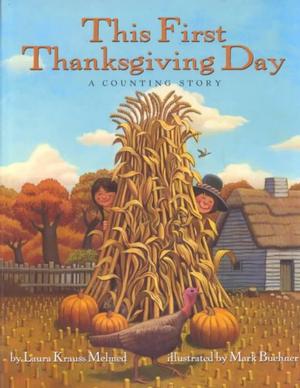
This First Thanksgiving Day

Dear Readers,

Two years ago, I recommended to my young friends a story entitled This First Thanksgiving Day by Laura Krauss Melmed and Mark Buehner (c. 2001).  Well, I stand corrected!  My elementary friends have quite enjoyed this Thanksgiving story too!

Revisit my previous post here.  Then consider letting the older readers read it to their younger siblings.  And while the younger siblings look for the hidden turkey on each two-page spread, have the older siblings look for that quirky dinosaur on various spreads (we're still not sure just how many).  While the younger siblings count the people on each spread, have the older siblings practice their addition by finding and then adding the various animals (squirrels, rabbits, fish, birds, geese, chickens, etc.) on each spread.  Either way, enjoy the fun activities while celebrating Thanksgiving!

Parents, this would be a great book to check out before that long car trip or while you're trying to get dinner on the table but the Macy's Day Parade ended hours ago.

Tuesday, October 2, 2012

Count Down to Fall


If your child is an animal lover, here's a book with detailed animal illustrations.  Count Down to Fall (c. 2009) with author Fran Hawk and illustrator Sherry Neidigh teaches about various trees, leaves, seeds, and animals.  Note: I love the illustrations but find the text somewhat lacking. However, the end pages presents good natural science information.

Sunday, October 9, 2011

Over in the Meadow


I have another folk-song turned into book for you today.  John Langstaff's retelling of Over in the Meadow (c. 1957) begs to be checked out due to Feodor Rojankovsky's gorgeous, lifelike illustrations.   In fact, I was going to scan more illustrations to share with you.  However, here's the problem: I can't decide which ones to share.  So you'll have to content yourself with the cover jacket until you're able to check this beauty out of your local library.

Since you're familiar with this old counting song, I'll only include the first stanza to jog your memory:
              Over in the meadow in the sand in the sun
              Lived an old mother turtle and her little turtle one.
              "Dig," said the mother, "I did," said the one;
              So he dug and was glad in the sand in the sun. 

Once you check out Over in the Meadow, you'll want to see more of Rojankovsky's illustrations.  I recommend the 1956 Caldecott Award Winning  Frog Went A-Courtin', a familiar Southern Appalachian ballad, originally written over four-hundred years ago in Scotland.

Tuesday, August 16, 2011

Morris Goes to School


 For your budding reader, check out Morris Goes to School by B. Wiseman (c. 1970).  It's just the kind of slapstick, Amelia-Bedelia type of humor that those budding readers enjoy so much.  They'll be secretly wishing that Morris will appear in their classroom.  Oh, and be sure to get a bag of gumdrops to go along with this story-time read.

Wednesday, January 5, 2011

The Twelve Days of Christmas

In closing out the Christmas season in true traditional form, and since it's the eve of the 5th, Twelfth Night, and most likely you'll be reading this close to January 6th, Twelfth Day, I'd like to share with you our latest.  This year, Nana gifted The Twelve Days of Christmas, and I'm just wild about the edition she chose, the most beautiful one out there, by Gennady Spirin.  Now what I find most fascinating about illustrator Gennady Spirin is not that he grew up near Moscow nor that he received five golden medals (sorry, I just had to) from various artistic societies nor that he is now a U.S. citizen.  Indeed, I find most interesting that Spirin was born on Christmas Day.  Now do you think this detail lends to the brilliant composition of his Christmas books?  I can't help but attribute the likelihood.


What also came as a surprise to me was Spirin's medium: watercolor and colored pencil.  His illustrations reflect the boldness and brilliance of the Renaissance, not at all reflective of typical watercolor scenes.  Unbeknowst to Nana, I had checked out all the editions of The Twelve Days of Christmas that our library offered, without finding a copy that met my expectations.  Gennady Spirin presented a pleasant surprise because what I like best about this edition is that it's how I envision the carol to be illustrated in accordance with it's history.  Thank you Mr. Spirin!  I'm discovering Gennady Spirin's books to be rare gems with illustrations to feast your eyes upon.

Now for a little history on this "Twelve Days of Christmas" song that the kids beg to be repeated but that we parents would personally rather hit "skip" for the rest of our lives.  Hold that impulse!  Before you hit "skip" for the up-teenth time, be forewarned: it appears our predecessors understood the importance of repetition and memory games long before medical research journals informed us of modern day benefits.
  • Yes, "The Twelve Days of Christmas" seems to have originated as a memory game that children played on Twelfth Night, wherein whoever forgot the line that fell to them had to forfeit a possession.
  • In 1780, "The Twelve Days of Christmas" manifested in print for the first time in an English children's book entitled Mirth Without Mischief.
  • Twelfth Night traditionally occurred on the night of December 5th with Twelfth Day following on December 6th.  
  • The twelve days following Christmas Day held great festivities during the Middle Ages up until the nineteenth century, with the grand celebration on Twelfth Night serving as the culmination of all preceding revelry (further construing the title of Shakespeare's play Twelfth Night, wherein the festivity serves as a springboard for a comedy aimed at merrymaking, folly, and masquerade).  
  • In historical church order, Twelfth Day marks the Epiphany, the day marking when the Magi offered their gifts of gold, frankincense, and myrrh to the Christ child.  
Whew! and to think I cut out much, much more historical information from that summary, which is clearly more for you parents' benefit.

So the next time the kids want to listen to "The Twelve Days of Christmas" over and over, just plop them down with Spirin's book and consider the activity as memory and counting enhancement without any work on your part.

Tuesday, December 14, 2010

Dream Snow

Oh, sigh, Eric Carle!  Who doesn't adore Eric Carle?  What home have his books not found a way to nestle themselves into?  I don't even need to explain how wonderful Eric Carle is.  We all know him to be a brilliant storyteller and a brilliant illustrator by his trademark tissue-paper collage illustrations.  Here's a current author / illustrator who has already become a classic.  One day our children's children will wax nostalgically about their memories of The Very Hungry Caterpillar and Brown Bear, Brown Bear, What Do You See?

I have quite an admiration for Eric Carle, so just imagine how that escalated when I saw him on a Mr. Roger's Neighborhood re-run back in September -- to see two extraordinary talented individuals Fred Rogers and Eric Carle on the TV screen at the same time and then to share that experience with my children -- pretty amazing!  I searched You Tube to share that episode with you, especially Carle's fascinating description of his artistic process, but alas it's not to be.  However, I did find his explanation of that creative process here.

I'm recommending Dream Snow today.  It's one of the kids' favorites!  Carle holds them captivated by the simple, yet magical, tale of a farmer routinely caring for his five animals  One wintry evening, he slips into slumber where "soon he dreamed of falling snowflakes."  Carle transports the allure of falling snow into a dreamlike holiday tale.  If you end up purchasing copy of Dream Snow, please be advised that it will become love-worn!

If you'd like to discover more about Eric Carle, check out his website here.  It's a great resource.

Monday, November 8, 2010

This First Thanksgiving Day

Over the next few weeks, I'm going to feature a few Thanksgiving books so you'll have time to check them out before Thanksgiving day.

One of the stories that the kids have wanted read to them over and over again is This First Thanksgiving Day: A Counting Story by Laura Krauss Melmed and illustrated by Mark Buehner.  They're taken with Buehner's bright, artful illustrations, jammed packed with "I spy" elements of squirrels, rabbits, and other creatures.  As Melmed writes the text in twelve poems, she highlights the day-to-day harvesting activities from the children's points of view.  Then Buehner ends with a beautiful scene of the two villages eating the first Thanksgiving feast together.

This story provides many fun teaching elements too! 
  • Since this is a counting story, practice counting the participants in each page as they ready for the very first Thanksgiving. 
  • Listen for the rhyme in the second and fourth lines. 
  • Have your children find the hidden turkey in each page. 

 Note: For children unfamiliar with the Thanksgiving story, I'd recommend begining with a book that gives a more comprehensive account of how the Wampanoag and the Pilgrims came together to share a bountiful harvest before I'd begin with this book (and I'll be featuring some of those  recommendations later this week).  Also, this particular story is better suited for the kindergarten and toddler ages.