One parent's (and her kids') guide to navigating the library and bookstore. My recommendations in children's book classics . . . literature for little ones, then and now.
Showing posts with label New England. Show all posts
Saturday, June 22, 2013
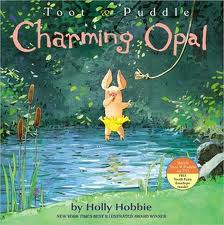
Charming Opal
If you've been following ReadMeAStory from the beginning, you know that around here we love Holly Hobbie's Toot & Puddle characters! If you want to check out a Toot & Puddle summertime adventure, check out Charming Opal (c. 2003).
Cousin Opal comes to visit Woodcock Pocket and enjoy all the pleasures of summertime in the country. But in the meantime, she looses her tooth. And I do mean that she looses it. Find out if the cousins find it in time for the Tooth Fairy's evening visit.
Monday, June 17, 2013
The Penderwicks
This is the book I would have loved to have read and re-read when I was a girl!!!
That being said, I'm just not sure what age to begin your child on this one. The publisher's recommendation is age 9, and I think I'll go along with that. I started to read it aloud to my brood . . . and they didn't want me to put it down. Meanwhile, I was reading ahead every chance I could get.
If you have a tween who is looking for a good read, I really liked this one (the brood did too!). It's a page turner of an adventure read. Nice and clean. Each character has his/her own special talent: from concert level pianist to mathematician, from botanist to storyteller, from nurturer to problem solver to athlete, so subtly this book encourages individuality with a positive vocabulary.
Yet at the same time, the adults can appear rather foolish --> from the absentminded-professor widowed father and a fairytale-like-wicked-stepmotherish snooty mother. And as an adventure story, there is some secrecy and sneaking. Some critics also contest that it's an idyllic, nostalgic, blast-from-the-past that's attempting to display a modern, American childhood. Those are most of the criticisms you'll run into.
So what do I think? Personally, I think it's a more modern approach to an adventure story for those of us who love the Boxcar Children. If you'd like to teach your reader to think critically, this could be a good, clean, adventure story to promote dialogue. Have your own family book club around it. Discuss these various assessments, and encourage your child to verbalize his/her own analysis. (Either way, you may want to do your own research rather than taking my word for it.)
So what's is the award-winning book The Penderwicks: A Summer Tale of Four Sisters, Two Rabbits, and a Very Interesting Boy by Jeanne Birdsall (c. 2007) all about? Here's what the publishers have to say:
This summer the Penderwick sisters have a wonderful surprise: a holiday on the grounds of a beautiful estate called Arundel. Soon they are busy discovering the summertime magic of Arundel’s sprawling gardens, treasure-filled attic, tame rabbits, and the cook who makes the best gingerbread in Massachusetts. But the best discovery of all is Jeffrey Tifton, son of Arundel’s owner, who quickly proves to be the perfect companion for their adventures.
Here are more Penderwick sequels:
Monday, November 19, 2012
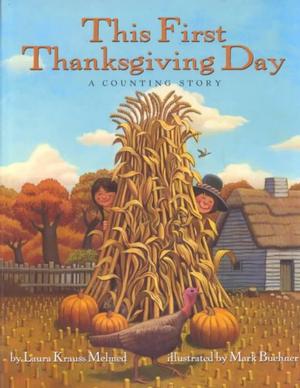
This First Thanksgiving Day
Dear Readers,
Two years ago, I recommended to my young friends a story entitled This First Thanksgiving Day by Laura Krauss Melmed and Mark Buehner (c. 2001). Well, I stand corrected! My elementary friends have quite enjoyed this Thanksgiving story too!
Revisit my previous post here. Then consider letting the older readers read it to their younger siblings. And while the younger siblings look for the hidden turkey on each two-page spread, have the older siblings look for that quirky dinosaur on various spreads (we're still not sure just how many). While the younger siblings count the people on each spread, have the older siblings practice their addition by finding and then adding the various animals (squirrels, rabbits, fish, birds, geese, chickens, etc.) on each spread. Either way, enjoy the fun activities while celebrating Thanksgiving!
Parents, this would be a great book to check out before that long car trip or while you're trying to get dinner on the table but the Macy's Day Parade ended hours ago.
Two years ago, I recommended to my young friends a story entitled This First Thanksgiving Day by Laura Krauss Melmed and Mark Buehner (c. 2001). Well, I stand corrected! My elementary friends have quite enjoyed this Thanksgiving story too!
Revisit my previous post here. Then consider letting the older readers read it to their younger siblings. And while the younger siblings look for the hidden turkey on each two-page spread, have the older siblings look for that quirky dinosaur on various spreads (we're still not sure just how many). While the younger siblings count the people on each spread, have the older siblings practice their addition by finding and then adding the various animals (squirrels, rabbits, fish, birds, geese, chickens, etc.) on each spread. Either way, enjoy the fun activities while celebrating Thanksgiving!
Parents, this would be a great book to check out before that long car trip or while you're trying to get dinner on the table but the Macy's Day Parade ended hours ago.
Saturday, November 17, 2012
Over the River and Through the Wood
Well, now there's a fierce competitor! Take a look at Matt Tavares' illustrated version entitled: Over the River and Through the Wood: The New England Boy's Song About Thanksgiving Day (c. 2011).
One word: BEAUTIFUL! Tavares cleverly weaves a story using the warm and humorous notes of a good storyteller . . . all through the media of pencil and paint brush. In fact, I would love to frame the opening title-page spread.
So just in time for Thanksgiving . . . check it out!
Also, (or if you can't make it to the library in time) discover the illustration process through the actions of artist Matt Tavares':
Saturday, November 26, 2011
Make Way for Ducklings
I realized that while I've been featuring some forgotten Robert McCloskey titles, I have neglected to recommend his beloved book Make Way for Ducklings (c. 1969). Oh this story with Caldecott winning illustrations remains a favorite for many! And it's another on the MUST list (books you must read to your children to enrich their childhood). And so our story begins:
Take a lovely, and historical, tour of Boston with the Mallard family in McCloskey's unforgettable children's classic Make Way for Ducklings.
And look! Boston Public Gardens even has the bronze sculpture by Nancy Schön commemorating McCloskey's book: http://www.boston-discovery-guide.com/make-way-for-ducklings.html#axzz1d4yVoFBL And check out the ducklings in their holiday finest: http://www.flickr.com/photos/dippy_duck/2173283522/ In fact, just Google "Make Way for Ducklings" and view all the images of the bronze brood throughout the seasons in Boston Public Gardens.
While I think that's recommendation enough, I must share a true story . . . that really . . . did . . . happen. This past summer when we vacationed with the Mister's family, we ate at a Brixx Pizza located near a small pond. While enjoying our pizza over laughter and conversation, all five cousins spotted a mother duck marching her ducklings past the glassed windows of the restaurant, 100 feet or so toward the pond. We ALL delighted in the sight, adults and children alike. Now I ask you, doesn't that spark your curiosity as to the inspiration behind McCloskey's story? It does mine!
Take a lovely, and historical, tour of Boston with the Mallard family in McCloskey's unforgettable children's classic Make Way for Ducklings.
And look! Boston Public Gardens even has the bronze sculpture by Nancy Schön commemorating McCloskey's book: http://www.boston-discovery-guide.com/make-way-for-ducklings.html#axzz1d4yVoFBL And check out the ducklings in their holiday finest: http://www.flickr.com/photos/dippy_duck/2173283522/ In fact, just Google "Make Way for Ducklings" and view all the images of the bronze brood throughout the seasons in Boston Public Gardens.
While I think that's recommendation enough, I must share a true story . . . that really . . . did . . . happen. This past summer when we vacationed with the Mister's family, we ate at a Brixx Pizza located near a small pond. While enjoying our pizza over laughter and conversation, all five cousins spotted a mother duck marching her ducklings past the glassed windows of the restaurant, 100 feet or so toward the pond. We ALL delighted in the sight, adults and children alike. Now I ask you, doesn't that spark your curiosity as to the inspiration behind McCloskey's story? It does mine!
Sunday, November 20, 2011
a Pumpkin Moonshine update:
Even though Halloween has passed. I just have to share this sweet little book by Tasha Tudor with you once again. You know, we all need our memories refreshed from time to time. And this little book remains an old friend. Just as good friends don't neglect each other, the dust jacket of Pumpkin Moonshine (c. 1938, renewed 1966) evidences love worn as its story becomes a familiar one. I don't think of it so much as a Halloween story as a late fall, November story. AND it's still in print!
So begins Tudor's charm:
Sylvie Ann was visiting her Grandmummy in Connecticut. It was Hallowe'en and Sylvie wanted to make a Pumpkin Moonshine, so she put on her bonnet and started out for the cornfield to find the very finest and largest pumpkin.
When they reached the field, Sylvie looked among the shocks of corn for the very fattest pumpkin. Way across the field she found such a fine one!Be sure to check out this delightful tale to discover what happens between the previous illustration and the following illustration. Of course, you'll want to read the ending too!
But worst of all it bumped right into Mr. Hemmelskamp who was carrying a pail full of whitewash!
Labels:
Ages 0-8,
Autumn,
Family,
Harvest,
Humorous,
New England,
Picture Book,
Pumpkin,
Witty,
zz: Tudor-Tasha
Wednesday, October 19, 2011
Tuttle's Red Barn
Tuttle's Red Barn: The Story of America's Oldest Family Farm
by Richard Michelson
Illustrated by Mary Azarian
copyright 2007
We stumbled upon this dear book, and even the kids sat through the whole long family tree of a story. I'd sit here and chatter on about it for hours, but really, the publisher G.P. Putnam's Sons did such a fabulous job with its jacket leaf write-up that I won't reinvent the wheel in saying anymore:
The story of Tuttle's Red Barn is the story of America. John Tuttle arrived in Dover, New Hampshire, in 1632 with only his father's ax an the two pewter candleholders his mother had given him after they'd hugged good-bye. But from that humble beginning he built the farm that, today, still stands on the same land.
Twelve generations have tilled this New England soil, taking part in many great milestones of American history along the way. The Tuttle family fought in the Revolutionary War, protected slaves on the Underground Railroad, and helped pave the way for the Industrial Revolution. A Tuttle was even there to offer maple syrup to Abraham Lincoln when he visited Dover!
A fascinating look at America as seen through the eyes of one family, Tuttle's Red Barn is a must-read for anyone who appreciates the story of our country. Caldecott medalist Mary Azarian's vibrant woodcut illustrations accompany Richard Michelson's informative and remarkable account of one family that has stayed connected through the centuries by a love of family, and one big red barn.
And if you'd like to see Tuttle's present day red barn and surrounding landscapes, here are some links:
http://www.flickr.com/photos/catchesthelight/3488876560/
http://richardmichelson.com/tuttle/book-release.html
http://richtexts.blogspot.com/2011/09/green-mountain-magic.html
Monday, October 10, 2011
Ox-Cart Man
Do you remember this book? I think I first discovered it via Reading Rainbow as LeVar Burton read it to his audience. Ox-Cart Man (c. 1979) by Donald Hall with Caldecott award winning illustrations by our beloved Barbara Cooney recalls the days of a 19th century New England family. Take a journey back in time from the moment you open the first page:
In October he backed his ox into his cart
and he and his family filled it up
with everything they made or grew all year long
that was left over.
A beautiful depiction of early settler life throughout the seasons, Ox-Cart Man takes the ten day travel to town to trade his goods for the necessities for surviving the next year on his family farm.
Tuesday, May 31, 2011
One Morning in Maine
One Morning in Maine, written and illustrated by Robert McCloskey (c. 1952), remains a quintessential example of excellent storytelling paired with exceptional artistry. Seriously, do not let your children's childhoods slip by without reading them this classic story! It's much more than just another book about loosing that first tooth. One word: i-d-e-n-t-i-f-i-c-a-t-i-o-n. Kids identify with Sal's disappointment. I would mention that this could be a lengthy read for the younger set, yet from the age of two, my children would let me read it to them every single day if I could handle it. It's in their top ten favorite books. And it's one that you parents will enjoy just as much as your kids. What's more to say?! Except that we're all dying to visit Maine!
Sunday, January 9, 2011
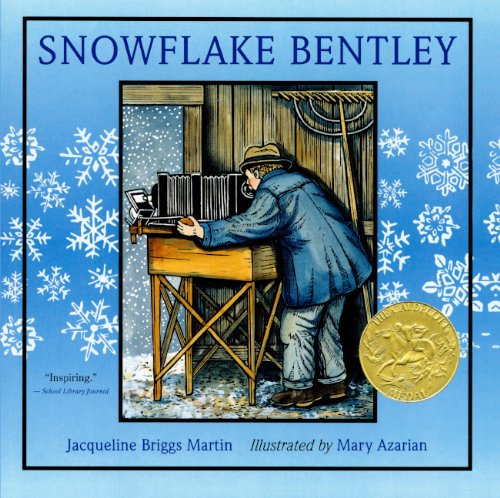
Snowflake Bentley
Dear reader, this is the time of year to check out the 1999 Caldecott Medal book Snowflake Bentley (c 1998), not only for Mary Azarian's award winning woodcuts "handtinted with watercolors" but also for the intriguing history lesson / biography by Jacqueline Briggs Martin of the man who gave us the first close-ups of a snowflake. Find out about Wilson Bentley's passion for snow and perseverance to discover a way to photograph snowflakes.
Here's a portion of the publisher's book review:
"Often misunderstood in his time, Wilson Bentley took pictures that even today reveal two important truths about snowflakes: first, that no two are alike, and second, that each one is startlingly beautiful."
And while the publishers recommend this particular picture book to ages 4-8, the history lesson is presented in such a beautiful way that you really should have your eldest children read it to their younger siblings. Then, for those older siblings, check out Snow Crystals and/or Snowflakes in Photographs both by W. A. Bentley himself.

All ages will especially like looking through the original photographs of MANY individual snowflakes. Afterwards, feel free to make your own snowflakes, as we did, using Lauren Stringer's tutorial (in correlation to her previously posted book, Snow).
Happy snow day!
Here's a portion of the publisher's book review:
"Often misunderstood in his time, Wilson Bentley took pictures that even today reveal two important truths about snowflakes: first, that no two are alike, and second, that each one is startlingly beautiful."
And while the publishers recommend this particular picture book to ages 4-8, the history lesson is presented in such a beautiful way that you really should have your eldest children read it to their younger siblings. Then, for those older siblings, check out Snow Crystals and/or Snowflakes in Photographs both by W. A. Bentley himself.

All ages will especially like looking through the original photographs of MANY individual snowflakes. Afterwards, feel free to make your own snowflakes, as we did, using Lauren Stringer's tutorial (in correlation to her previously posted book, Snow).
Happy snow day!
Monday, December 27, 2010
Stopping by Woods on a Snowy Evening
We had a white Christmas! I know that doesn't mean much to a lot of you, but for me, it was my first white Christmas, and for my little town, it's been the first white Christmas in 47 years! So you can imagine, it was pretty special. That and we've all had precious moments with extended family!
So the perfect book for such an occasion is Stopping by Woods on a Snowy Evening (c. 1978). Once again, Susan Jeffers gives us a breathtakingly beautiful book. You must check out her interpretation of Robert Frost's poem.
Jeffers lends an enchanting quality to Frost's quietly enthralling poem. Frost's poem conveys the magical silence and deceleration to life's pace that a newly falling snow brings about. Jeffers faithfully compliments the peaceful solitude captured by Frost's poem. The text and illustrations in this book transports the reader into the allure of a snowstorm, bestowing a serene and spellbinding experience.
Readers, comment on which page or spread is your favorite. It's a tough choice, isn't it!
So the perfect book for such an occasion is Stopping by Woods on a Snowy Evening (c. 1978). Once again, Susan Jeffers gives us a breathtakingly beautiful book. You must check out her interpretation of Robert Frost's poem.
Jeffers lends an enchanting quality to Frost's quietly enthralling poem. Frost's poem conveys the magical silence and deceleration to life's pace that a newly falling snow brings about. Jeffers faithfully compliments the peaceful solitude captured by Frost's poem. The text and illustrations in this book transports the reader into the allure of a snowstorm, bestowing a serene and spellbinding experience.
Readers, comment on which page or spread is your favorite. It's a tough choice, isn't it!
Sunday, November 21, 2010
Over the River and Through the Wood
If I had more time and energy, I would review all the many versions of Over the River and Through the Wood that are out there today. But I have neither. So, let me share with you two favorites from my personal search last year.
My very favorite is Brinton Turkle's illustrated copy from 1974. I mean that name alone, Brinton Turkle, is just so much fun to say. It's a song in and of itself: Brinton Turkle, Brinton Turkle, Brinton Turkle, Brinton Turkle. Okay, maybe I've been hanging out with my kids too long. But they (the kids) love this version; so much so, that we had to buy it. So we have our very own copy of the nineteenth century, New England family's journey "through the white and drifted snow" to read as often as we please. And we do read it often! The kids' favorite verse is:
I also enjoyed Christopher Manson's beautifully illustrated woodcuts. Manson takes us on a journey "with a clear blue winter sky" from the perspective of a young boy witnessing the activities of other little boys (sailing on ice, gathering firewood, sledding, ice skating, playing hockey, giving sugar to a horse, fishing, logging, etc.) while on the way to his "grandmother's house." I think Manson's viewpoint best reflects Lydia Maria Child's intention since she first entitled the poem "The Boy's Thanksgiving." Now, I know I've whetted your appetite to find a version and read up to "the pumpkin-pie!"
I took the following information about Child's poem turned song from Over the River and Through the Wood: A Thanksgiving Poem by Lydia Maria Child illustrated with woodcuts by Christopher Manson. New York: North-South Books, 1993.
My very favorite is Brinton Turkle's illustrated copy from 1974. I mean that name alone, Brinton Turkle, is just so much fun to say. It's a song in and of itself: Brinton Turkle, Brinton Turkle, Brinton Turkle, Brinton Turkle. Okay, maybe I've been hanging out with my kids too long. But they (the kids) love this version; so much so, that we had to buy it. So we have our very own copy of the nineteenth century, New England family's journey "through the white and drifted snow" to read as often as we please. And we do read it often! The kids' favorite verse is:
Over the river, and through the wood --
Oh, how the wind does blow!
It stings the toes,
And bites the nose,
As over the ground we go.
In Turkle's version, it's "to grandfather's house we go." He also includes all twelve verses, making the journey palpable, escalating our anticipation to that beloved last line: "Hurrah for the pumpkin-pie!" There's also music included on the last page, if you'd like to play Child's song for yourself.I also enjoyed Christopher Manson's beautifully illustrated woodcuts. Manson takes us on a journey "with a clear blue winter sky" from the perspective of a young boy witnessing the activities of other little boys (sailing on ice, gathering firewood, sledding, ice skating, playing hockey, giving sugar to a horse, fishing, logging, etc.) while on the way to his "grandmother's house." I think Manson's viewpoint best reflects Lydia Maria Child's intention since she first entitled the poem "The Boy's Thanksgiving." Now, I know I've whetted your appetite to find a version and read up to "the pumpkin-pie!"
I took the following information about Child's poem turned song from Over the River and Through the Wood: A Thanksgiving Poem by Lydia Maria Child illustrated with woodcuts by Christopher Manson. New York: North-South Books, 1993.
The song we know today as 'Over the River and Through the Wood'
is adapted from a poem by Lydia Maria Child. The poem was first
published in her popular three-volume anthology for boys and girls,
Flowers for Children (1844-1846). During the nineteenth century
it was reprinted many times under various titles. Child's poem
became the unofficial anthem of Thanksgiving after her friend
John Greenleaf Whittier included it in Child Life (1871),
his immensely popular collection of nineteenth-century children's
verse. The original poem was twelve verse long, but it has often
been shortened to six. This book uses the verses that appeared
in the Whittier anthology under the title 'Thanksgiving Day'.
Tuesday, November 16, 2010
The Very First Thanksgiving Day
The Very First Thanksgiving Day by Rhonda Gowler Greene with paintings done by Susan Gaber (copyright 2002) was quite a hit with the kids! The story follows a rhythm comparable to "This is the House that Jack Built" with its own clever rhymes. Greene begins her story in the classical literary technique in medias res ("in the middle of things") with "This is the very first Thanksgiving day" and builds her story backward to England and then again forward to the first feast, making this version a unique approach in retelling the Thanksgiving story.
Once again, I have been stunned by the artwork! I could just sit and look at this book again and again! Gaber does a beautiful job of depicting the brilliant colors of the Pilgrims' natural-dyed clothing. And your kids will delight in the frequent images of children throughout Gaber's illustrations. Have your children search for the Pilgrim and Wampanoag dolls throughout the story and discover the themes of thanksgiving and sharing through visual representation. Don't miss the author and illustrator's notes at the beginning for fascinating background information.
Monday, November 15, 2010
The Pilgrims of Plimoth
I especially enjoyed reading The Pilgrims of Plimoth written and illustrated by Marcia Sewall (copyright 1986). What I particularly like about this book is that the language rings true to the time period (complete with a thirty-seven word glossary in the back). Sewall dedicates her book to "The Pilgrim Village Interpreters, whose great spirit gives life to our Plimoth pilgrims" and captures that living history feel in her text. It "sounds" like an oral history recitation, making it a pleasure to read aloud. Meanwhile, Sewall's illuminated paintings further bring her text to life.
What's unique about Sewall's book is that she gives a detailed account of life after the Thanksgiving feast. She chronicles the events from the Mayflower's voyage to the growth of "Plimoth" Plantation through the following sequential points of view: The Pilgrims, the Menfolk, the Womenfolk, the Children and Youngfolk ("of survivors . . . over half were children"), and The Plantation.
Saturday, November 13, 2010
N.C.Wyeth's Pilgrims
What a treat!!! In N.C. Wyeth's Pilgrims, acclaimed children's author Robert San Souci takes Newell Convers Wyeth's series of murals originally created for the Metropolitan Life Insurance Company in New York and gives them a voice with his thoroughly researched text (text copyright 1991 and illustrations copyright 1945). Souci's succinct yet detailed account presents a thorough summary of events from the excellent contrast between the Pilgrims and the "strangers" to a factual synopsis of life in the village after the feast.
Wyeth's twelve paintings, although not entirely historically accurate, provide a visual feast. For those of you unfamiliar with N.C. Wyeth, he is father to Andrew Wyeth and to a lineage of talented American artists. Here's a website to quickly view some of his most recognizable children's book illustrations: click here. And last, but certainly not least, the book's endpapers supplies a copy of the Mayflower's original passenger list, furnishing a fascinating historical read.
![]() |
| A Pilgrim father shows his son how to shuck corn. |
Thursday, November 11, 2010
The Thanksgiving Story
The Thanksgiving Story written by Alice Dalgliesh and illustrated by Helen Sewell received the 1955 Caldecott Honor, making this the earliest Thanksgiving book that I'll feature. What I like best about this book is that Dalgliesh personalizes the Thanksgiving account by telling the story of Giles, Constance, Damaris, and little Oceanus who was born at sea. Through her simple text we learn about the day-to-day activities that the Hopkins family experiences through surviving, planting, harvesting, and feasting. This is shorter than Weisgard's version, allowing the little ones to follow it more easily.
Wednesday, November 10, 2010
The Plymouth Thanksgiving
Hello, readers! Now we're getting into the books telling about the Pilgrims journey from England to the New World, their grueling winter, the Wampnoag tribe's critical help during the planting season, and the celebration of the very first Thanksgiving feast. Over the course of the next few days, I'm going to acquaint you with a handful of my top picks (after examining many choices) that introduce this story. In each book, I learned something new about the Pilgrims' journey which became the exciting part of this process. Of course, each story-teller and illustrator communicates their version of Thanksgiving story differently, so hopefully you'll find one version that's best suited for each of your children.
Today, we're going to take a look at illustrator Leonard Weisgard (1916-2000). Weisgard won the Caldecott Medal in 1947 for his illustrations of The Little Island, and you can read more about him in this short biography. Weisgard wrote and illustrated The Plymouth Thanksgiving (copyright in 1967), striving to attended to detail and accuracy by using William Bradford's diary and by spending extensive time and research at Plymouth, Massachusetts.
Weisgard is best known for his illustrations, and this is no exception (I've included two different cover illustrations). The kids especially liked being able to see the detail of the Mayflower interior. Personally, I was gripped by the listing of all the passengers on the Mayflower, which made the story come alive for me (and made the fact that only half survived all the more startling).
Today, we're going to take a look at illustrator Leonard Weisgard (1916-2000). Weisgard won the Caldecott Medal in 1947 for his illustrations of The Little Island, and you can read more about him in this short biography. Weisgard wrote and illustrated The Plymouth Thanksgiving (copyright in 1967), striving to attended to detail and accuracy by using William Bradford's diary and by spending extensive time and research at Plymouth, Massachusetts.
Weisgard is best known for his illustrations, and this is no exception (I've included two different cover illustrations). The kids especially liked being able to see the detail of the Mayflower interior. Personally, I was gripped by the listing of all the passengers on the Mayflower, which made the story come alive for me (and made the fact that only half survived all the more startling).
Monday, November 8, 2010
This First Thanksgiving Day
Over the next few weeks, I'm going to feature a few Thanksgiving books so you'll have time to check them out before Thanksgiving day.
One of the stories that the kids have wanted read to them over and over again is This First Thanksgiving Day: A Counting Story by Laura Krauss Melmed and illustrated by Mark Buehner. They're taken with Buehner's bright, artful illustrations, jammed packed with "I spy" elements of squirrels, rabbits, and other creatures. As Melmed writes the text in twelve poems, she highlights the day-to-day harvesting activities from the children's points of view. Then Buehner ends with a beautiful scene of the two villages eating the first Thanksgiving feast together.
This story provides many fun teaching elements too!
Note: For children unfamiliar with the Thanksgiving story, I'd recommend begining with a book that gives a more comprehensive account of how the Wampanoag and the Pilgrims came together to share a bountiful harvest before I'd begin with this book (and I'll be featuring some of those recommendations later this week). Also, this particular story is better suited for the kindergarten and toddler ages.
One of the stories that the kids have wanted read to them over and over again is This First Thanksgiving Day: A Counting Story by Laura Krauss Melmed and illustrated by Mark Buehner. They're taken with Buehner's bright, artful illustrations, jammed packed with "I spy" elements of squirrels, rabbits, and other creatures. As Melmed writes the text in twelve poems, she highlights the day-to-day harvesting activities from the children's points of view. Then Buehner ends with a beautiful scene of the two villages eating the first Thanksgiving feast together.This story provides many fun teaching elements too!
- Since this is a counting story, practice counting the participants in each page as they ready for the very first Thanksgiving.
- Listen for the rhyme in the second and fourth lines.
- Have your children find the hidden turkey in each page.
Note: For children unfamiliar with the Thanksgiving story, I'd recommend begining with a book that gives a more comprehensive account of how the Wampanoag and the Pilgrims came together to share a bountiful harvest before I'd begin with this book (and I'll be featuring some of those recommendations later this week). Also, this particular story is better suited for the kindergarten and toddler ages.
Monday, November 1, 2010
Carol Ryrie Brink
How many of you are familiar with Caddie Woodlawn by Carol Ryrie Brink? Often a forgotten jewel of a story, I wish there was a resurging awareness of this frontier narrative. Caddie grows up in a family full of brothers, and she conducts herself as an adventure loving tomboy, much to her Boston bred mother's chagrin. Brink packs each chapter with the spunky Caddie and her brother's escapades as they maneuver the hazards of frontier life in mid-nineteenth century Wisconsin. What stands out most to me in remembering this book, however, is that Brink casts Caddie's father as the hero. I think we need more of those around -- books that cast daddies as heroes! Caddie Woodlawn is a "must read" for all members of the family, perfect for either reading alone or reading aloud. Also of noteworthy interest, Brink bases Caddie's story on her own grandmother's childhood. I've included a copy of the old edition cover I grew up reading.
Now that you know how much I fell for Brink's little jewel of a book, you can imagine my surprise and elation when I discovered Brink's poem Goody O'Grumpity in the children's book section of our library. Ashley Wolff's intricate hand-colored linoleum prints further lend a detailed description to this simple story poem. The poem opens with "When Goody O'Grumpity baked a cake" and continues on about an early Plymouth Plantation neighbor making a spice cake while the village children eagerly wait "With wishful eyes / and watering mouth." Don't be mislead by Goody's last name "O'Grumpity." It's not at all a characterization of her. Brink uses it for the rhyme. So do check out this harvest season gem of a book, and be sure to read the illustrator's note at the beginning.
If you end up enjoying Goody O'Grumpity as much as I did, try Jane Yolen's Harvest Home poem illustrated by Greg Shed. Yolen's beautiful lyrical narrative describes a family's and community's work in harvesting wheat and the harvest traditions that follow. Shed's illustrations reverberate the harvest theme in its golden, "sun kissed hues done in gouache on canvas." Again, be sure to read the "Harvest Customs" note in the back of the book.
Now that you know how much I fell for Brink's little jewel of a book, you can imagine my surprise and elation when I discovered Brink's poem Goody O'Grumpity in the children's book section of our library. Ashley Wolff's intricate hand-colored linoleum prints further lend a detailed description to this simple story poem. The poem opens with "When Goody O'Grumpity baked a cake" and continues on about an early Plymouth Plantation neighbor making a spice cake while the village children eagerly wait "With wishful eyes / and watering mouth." Don't be mislead by Goody's last name "O'Grumpity." It's not at all a characterization of her. Brink uses it for the rhyme. So do check out this harvest season gem of a book, and be sure to read the illustrator's note at the beginning.
If you end up enjoying Goody O'Grumpity as much as I did, try Jane Yolen's Harvest Home poem illustrated by Greg Shed. Yolen's beautiful lyrical narrative describes a family's and community's work in harvesting wheat and the harvest traditions that follow. Shed's illustrations reverberate the harvest theme in its golden, "sun kissed hues done in gouache on canvas." Again, be sure to read the "Harvest Customs" note in the back of the book.
Subscribe to:
Posts (Atom)